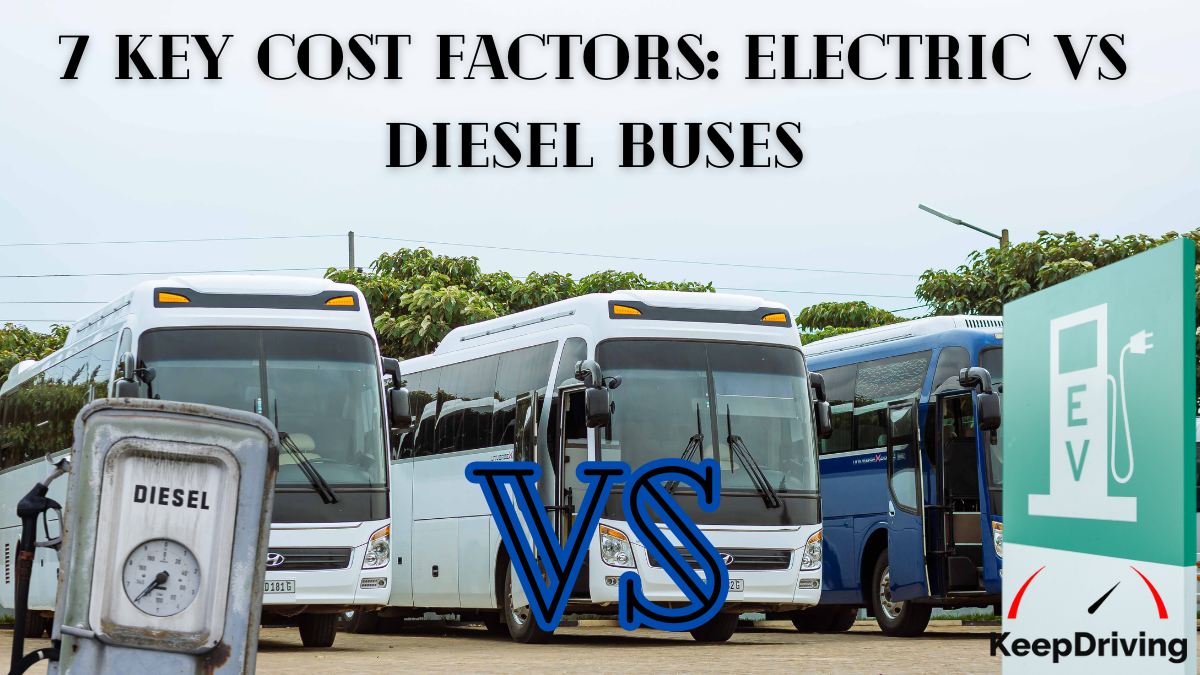
When comparing the 7 key cost factors of electric vs diesel buses, it's clear electric buses shine as a long-term investment. They're pricier initially, but their high fuel efficiency, manageable operational expenses, and longer lifespan stack up savings over time. Their resale value remains high, unlike diesel buses. Plus, they score environmental brownie points by slashing emission costs. We're just touching the surface here. Continue with us on this journey to peel back more layers of this financially and environmentally impactful shift.
Key Takeaways
- Electric buses have a higher initial purchase price but offer significant long-term savings.
- Operational and maintenance costsThe costs associated with keeping a vehicle in good working condition, including repairs and regular... are lower for electric buses than diesel buses.
- Electric buses are more fuel-efficient, converting up to 80% of electrical energy into power.
- Electric buses have a longer life expectancy and retain a higher resale value.
- Environmental impact costs are lower for electric buses due to reduced emissions and cleanup expenses.
Initial Purchase Price: Electric Vs Diesel Buses
While considering the initial purchase price, it's important to mention that electric buses typically cost considerably more upfront than their diesel counterparts.
However, don't let this deter you. We must look beyond the initial investment, as financing options are readily available that can help spread the cost over time. These financial aids can greatly reduce the burden of the initial higher cost.
Analyzing data, electric buses, though pricey upfront, offer potential savings in the long term. As part of our community, we want you to understand this aspect of the electric vs. diesel bus debate.
The initial cost, though overwhelming, is just a part of the bigger picture in this cost-effective and environmentally friendly shift.
Operational and Maintenance Costs: A Comparative Analysis
When it comes to the operational and maintenance costs, the difference between electric and diesel buses is astonishingly pronounced.
Data shows that electric buses offer significant savings in this area. Their operational efficiency is superior, with fewer moving parts reducing the need for regular maintenance. Additionally, maintenance scheduling for electric buses is simplified due to the predictability of their wear and tear.
On the other hand, diesel buses require frequent and often complex maintenance, inflating operational costs. The cost of replacing parts, from filters to engines, can quickly accumulate.
Fuel Efficiency and Costs: Electric Vs Diesel
Even though operational and maintenance costs are a big part of the equation, another key aspect to evaluate is fuel efficiency and costs.
Diesel buses traditionally rely on fluctuating fossil fuel prices, while electric buses tap into improving battery technology and diverse energy sources. Current data shows electric buses offer superior fuel efficiency, converting up to 80% of electrical energy into power, markedly higher than diesel's 30-40%.
This efficiency translates into tangible cost benefits. Despite higher upfront costs, electric buses' lower fuel costsThe expense drivers incur for fuel, often a significant part of their operating costs. can result in substantial savings over a vehicle's lifespan.
We're seeing a shift towards sustainable, efficient transport, and embracing electric buses is a step in that direction.
Life Expectancy and Resale Value: A Detailed Comparison
Moving from fuel efficiency and costs, we now turn our attention to the life expectancy and resale value of electric and diesel buses.
In a lifecycle assessment, electric buses outlast their diesel counterparts by a significant margin. This durability translates into a higher resale value despite faster initial depreciation rates.
Our data shows that electric buses retain 60% of their original price after 10 years, compared to just 40% for diesel buses. This makes electric buses a more profitable long-term investment for us.
However, let's not forget the impact of local market conditions and maintenance practices on resale values.
We're in this journey together, and understanding these factors will help us make more informed decisions.
Environmental Impact and Associated Costs

Now, let's shift our focus to the environmental impact and associated costs of electric and diesel buses.
This discussion will analyze emission costs comparison, factoring in the potential expenses tied to CO2, NOx, and particulate matter.
We'll also examine the financial implications of environmental clean-up efforts, providing a data-driven look at the potential impact on budgets and the environment.
Emission Costs Comparison
While we've been analyzing the upfront costs of electric and diesel buses, it is crucial to also consider the less visible but significant emission costs. When we take into account the emission regulations, the picture starts to shift. These costs can be quantified by considering the carbon credits earned or lost.
| Bus Type | Carbon Credits |
|---|---|
| Electric | Earns Credits |
| Diesel | Loses Credits |
Electric buses, by virtue of zero emissions, earn carbon credits, which can be monetized. Diesel buses, on the other hand, emit greenhouse gases, leading to penalties under many emission regulations. It's clear that the environmental cost is not just about the initial price tag. By being part of the solution, we can make a significant impact on our planet and our budgets.
Environmental Clean-up Expenses
As we explore the topic of environmental clean-up expenses, it's important to underscore the stark differences between electric and diesel buses.
Diesel buses, notorious for their heavy pollution, require costly and extensive pollution cleanup. The remediation costs, which include soil and groundwater decontamination, can skyrocket, burdening taxpayers.
On the other side, electric buses, which generate no tailpipe emissions, considerably reduce these expenses, making them a more cost-effective and environmentally friendly option.
Data from numerous cities worldwide show a steep decline in clean-up costs when shifting to electric bus fleets.
As a result, investing in electric buses isn't just about reducing emissions; it's about easing the hefty financial burden of environmental clean-up.
Together, we can make a cleaner, greener future.
Infrastructure and Charging Requirements: Costs for Electric Buses
In reflecting on the costs associated with electric buses, it's vital to factor in the expenses for infrastructure and charging requirements. These costs can be substantial, especially when contemplating the need for upgrading grid capacity to accommodate large-scale charging infrastructure.
Data shows that the upfront costs can be considerable, with the infrastructure alone accounting for around 10% of total costs. However, it's also essential to take into account the long-term savings.
Once charging stations are installed, the cost per kilowatt-hour decreases markedly. Plus, maintenance costs are generally lower for electric charging systems.
As we endeavor for a more sustainable future, these are costs we can't afford to overlook. It's a clear investment into our shared future.
Government Policies, Incentives, and Tax Benefits
Given the high upfront costs of electric buses, it's worth noting that government policies, incentives, and tax benefits can greatly impact the financial viability of these vehicles. Many governments provide financial incentives to promote the use of electric buses. These can considerably decrease the cost burden for transport agencies, making electric buses a more affordable choice.
Let's check out an illustrative table that highlights some key government incentives and tax benefits:
| Government Incentives | Tax Benefits |
|---|---|
| Subsidies for purchasing electric buses | Depreciation benefits for electric buses |
| Grants for electric bus infrastructure | Tax credits for electric bus purchases |
| Rebates for electric bus conversion | Reduced tax rates for electric bus operations |
These policies show our collective commitment to a cleaner, greener future. For us, it's not just about saving money—it's also about being part of a community that cares for our environment.
Frequently Asked Questions
What Is the Typical Passenger Capacity for Electric and Diesel Buses?
We've found that both electric and diesel buses typically hold 40-60 passengers. However, passenger comfort may vary due to different seating arrangements. We're all part of this transit community, so let's consider everyone's comfort.
How Does the Performance of Electric Buses Compare to Diesel in Extreme Weather Conditions?
We've found that extreme weather can affect battery performance in electric buses more than diesel. Cold temperatures, particularly, can reduce range. Still, we're all in this together, seeking greener, more efficient transportation solutions.
What Are the Safety Measures Implemented in Electric Buses Compared to Diesel Buses?
We've found electric buses often have superior safety protocolsAdhering to all safety protocols such as mask-wearing and hand sanitizing, especially during health ... for accident prevention compared to diesel buses. They're designed with advanced technologies that increase driver visibility and reduce the likelihood of collisions. You're in good hands with them!
What Is the Time Frame Needed to Fully Charge an Electric Bus?
We've found that charging technology and battery efficiency vary, but typically, we can fully charge an electric bus in about three to four hours. It's a straightforward process, making us feel part of the green energy revolution.
Are There Specific Driver Training Requirements for Operating Electric Buses?
Yes, there are. We've found that specific driver certificationThe process by which drivers are officially approved to operate on the ridesharing platform. and training programs are needed for operating electric buses. It's different from diesel buses, but we're here to support you through this learning curve.